














For years, global conversations about Africa’s growth have focused on what the continent lacks: funding, infrastructure, or institutional strength. But what if the real story isn’t about scarcity, but potential?
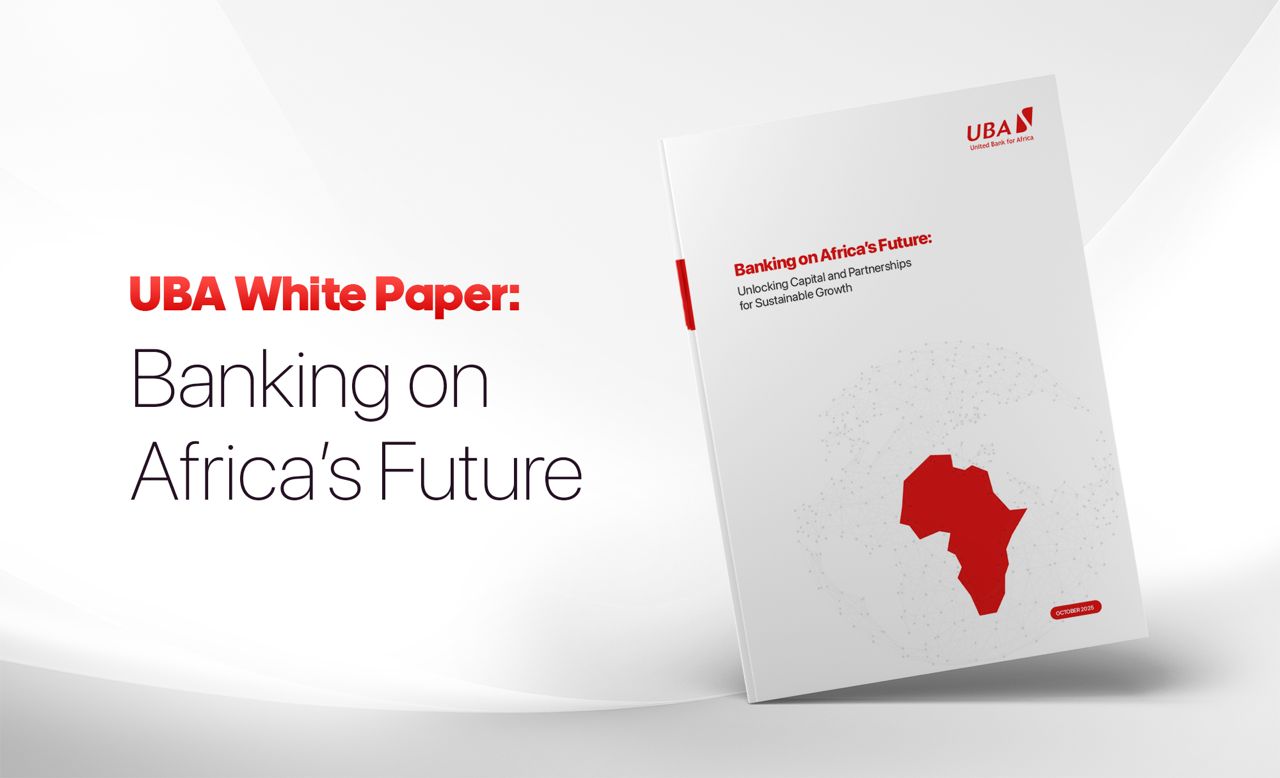
According to UBA’s new white paper, Banking on Africa’s Future: Unlocking Capital and Partnerships for Sustainable Growth, Africa holds more than $4 trillion in domestic financial assets. The issue isn’t that capital doesn’t exist; it’s that much of it remains idle, tied up in low-yield sovereign debt or parked abroad instead of fueling roads, power grids, innovation hubs, and small businesses.
Rethinking Development Finance
Africa’s financing challenge is not a question of money, but of movement; how to channel local wealth into productive investments. This requires collaboration, not just capital.
Development finance institutions, local banks, pension funds, and global investors are increasingly coming together to design smarter, blended models of funding. These partnerships de-risk large projects and open the door for institutional investors who once saw Africa as high-risk territory.
“Africa’s transformation requires capital, partnership, and collaborative innovation working together,” notes our Group Managing Director, Oliver Alawuba, in the report. “At UBA, we don’t simply provide financing; we co-create financial architectures that convert national visions into bankable realities.”
From Aid to Alliances
The white paper highlights a powerful shift underway: from aid dependency to investment-driven alliances. Across the continent, African financial institutions are stepping into leadership roles, bridging domestic capital and international expertise.
In Nigeria, infrastructure credit guarantees are unlocking pension funds for national development. In Ghana, trade finance partnerships are empowering SMEs to compete globally. And through the AfCFTA and PAPSS, African economies are knitting together into a single $3.4 trillion market that can trade, invest, and grow on its own terms.
Why This Matters Now
With global capital flows tightening, Africa’s ability to finance itself is an economic advantage and a necessity. Partnerships between African and global financial players offer a practical path to long-term, inclusive growth.
The question is no longer whether Africa can attract investment, but how its own institutions can lead that investment.
A Call to Action
The white paper offers a roadmap: mobilise local resources, strengthen partnerships, and align every dollar with purpose and impact. This is the blueprint for the Africa of tomorrow, self-financed, collaborative, and sustainable.
Download the full white paper: Banking on Africa’s Future: Unlocking Capital and Partnerships for Sustainable Growth, to explore how partnerships and domestic capital are shaping the next chapter of Africa’s growth story.