











Gabon and the industrialization of manganese: How to
promote investments for the local processing of manganese.
promote investments for the local processing of manganese.
« Manganese, promising mineral resource capable of
boosting the Gabonese economy»
boosting the Gabonese economy»
For over half a century, the Gabonese economy has known several evolutions. First, it was based on the exploitation of its wood wealth before giving a prominent place to the exploitation of oil representing approximately 40% of GDP and generating over 85% of export earnings from the beginning of 1970. An economic model that has made Gabon an extroverted country, driven by annuity.
To avoid the constraints of its heavy dependence on raw materials subject to fluctuations in world oil and wood costs, the country now has the choice to diversify its economy by building on the various pillars, the star of the development of the sector industrial. This vision is driven by the President of the Republic, Head of State, Ali BONGO ONDIMBA, through the Gabon Emergent Strategic Plan, an ambitious framework which will allow Gabon to rise to the rank of an emerging country by 2025.
This national industrialization strategy underlying the outbreak of agribusiness; investments for advanced wood processing, developing a dynamic local industry but also building a mining and metallurgical pole of international rank with local added value.
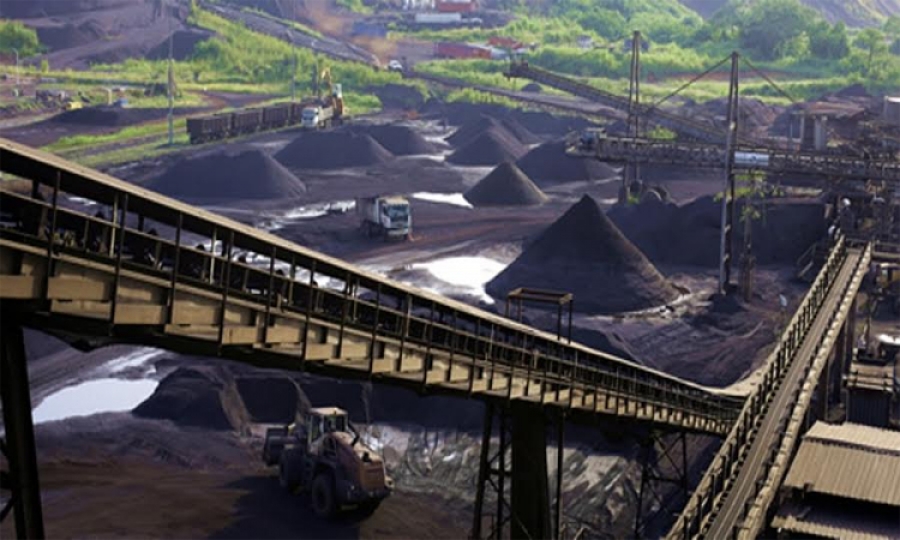
Mining in Gabon is mainly based on the extraction of manganese. This mineral is the subject of special attention, given its strategic importance for the development of the country.
Indeed, Gabon is the second world producer of manganese with 25% of
world demand. It has many unexploited deposits, notably in Okondja in
Haut-Ogooué, or even in Ndjolé in Moyen-Ogooué. Gabon therefore has a very competitive mineral in terms of its quality, making it among the most important in the world. In this momentum, France remained its main partner through Comilog, the subsidiary of the French group ERAMET. Comilog managed to raise its production to around 4 million tonnes, representing a realization of 741.3 billion CFA francs in its turnover in 2018, against 634.5 billion in 2017.
This bet was made possible through the creation of a silicomanganese production factory, production-oriented in line with the economic ambition where this fits in the country. However, this sector is expected for deep diversification, However, this sector is expected to profound diversification, suggesting the diversification of partners, and in turn, points to the arrival of other investors could increase the annual production of this mineral.
The purpose of this diversification is to build a real manganese industry, focused on the local processing of this raw material in order to capture the benefits generated by the value chain.
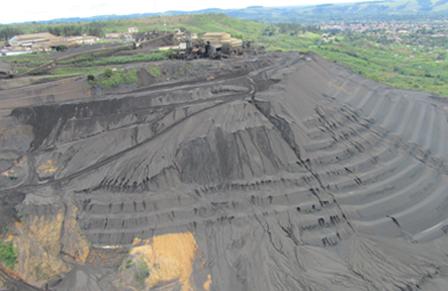
It is for this reason that Gabon has embarked on the promotion of investments in order to achieve the objective of 35% local processing of manganese by 2025. This major project aims to attract a large number of businesses and support institutions to enter into a partnership that would be beneficial for all stakeholders. To this end, two Indian operators Mohan Export India PVT and Manganese Ore India Ltd (MOIL) are interested in the exploitation of part of the Gabonese deposits.
Potential investments by institutions of all kinds would favor this industrialization process. Take the European model in which the banks set themselves up as lenders and invest mainly in fossil fuels. In 2018, for example, the largest investment banks earned about $ 2.9 billion in commission on fossil fuel projects. Oil trading generated $ 1.8 billion in revenue.
Our banking establishments would benefit from following the example of their Western sisters who have not hesitated to support such projects and who in the long term enjoy the spinoffs of their audacity.
Reaching this horizon necessarily involves massive investments made by foreign investors, in the framework of public-private partnerships. The
establishment of a real metallurgical centre will depend on Gabon’s ability to capture these investments through an appropriate policy, supported by a calmed business climate.
establishment of a real metallurgical centre will depend on Gabon’s ability to capture these investments through an appropriate policy, supported by a calmed business climate.