










Everyone seemed fairly excited when the Millenial Development
Goals(MDGs) were created at the turn of the century in 2000. Organisations and
donor agencies as well as governments, were ready to tackle the issue of world
poverty levels which at that time was at about 2.5 billion poor people in the
world.
Goals(MDGs) were created at the turn of the century in 2000. Organisations and
donor agencies as well as governments, were ready to tackle the issue of world
poverty levels which at that time was at about 2.5 billion poor people in the
world.
The MDGs were meant to achieve poverty eradication to a significant
level and it was aimed at the poorest countries. A lot of strides were made,
but there was still poverty everywhere.
level and it was aimed at the poorest countries. A lot of strides were made,
but there was still poverty everywhere.
So, the Sustainable Development Goals(SDGs) were born at the UNGA in
September 2015. With these new goals, the timeline for the agenda is 2030.
September 2015. With these new goals, the timeline for the agenda is 2030.
The world wants to see amongst other things:
·
Zero hunger
Zero hunger
·
Zero poverty
Zero poverty
·
Good health and well being for all
Good health and well being for all
·
Quality education for all
Quality education for all
·
Gender equality
Gender equality
·
Environmentally conscious societies
Environmentally conscious societies
These are some of the top sustainability goals for governments, donor
agencies, private organisations as well as individuals.
agencies, private organisations as well as individuals.
On November 7, 2019, I attended the De Beers Summit for women in
Gaborone, Botswana. The beautiful, clean and calm city in the southern region
of Africa, is one of the continent’s best hidden secrets. Batswana who are
known for their kindness, have certainly worked hard since being one of the
poorest countries in the world at the time of their independence in 1966, to
becoming one of the wealthiest nations in the Southern African region. The
country’s GDP is about $19 billion dollars and their GDP per capita is one of
the highest on the African continent at about $18,200.
Botswana’s currency, the Botswana Pula, is stronger than the South
African rand. Their main source of revenue is the mining of diamonds. And De
Beers mining company which has been in existence for 131 years in Southern
Africa has been generating hundreds of millions of dollars annually for the
country through the mining of diamonds. The government of Botswana has a stake
in this company and their joint venture which is called Debswana(De Beers
and Botswana combined) was formed in 1969.
The title of the summit I attended was ‘Bridging leadership and purpose
for socio economic impact’. I was to speak on a panel on sustainability and
finance along with Lynette Armstrong, the Managing Director of Debswana; Lulu
Rasebotsa, the MD of Liberty life in Botswana and Reason Nyamambi, from Hollard
Life in Botswana too,
for socio economic impact’. I was to speak on a panel on sustainability and
finance along with Lynette Armstrong, the Managing Director of Debswana; Lulu
Rasebotsa, the MD of Liberty life in Botswana and Reason Nyamambi, from Hollard
Life in Botswana too,
This summit was focused on women. And yes, gender equality being one of
the top 5 SDGs, the focus was not in any way misplaced. Organised by women and
for women, the discussions were warm and passionate. I was in the company of
very knowledgeable women both participating in the audience and speaking about
their experiences.
the top 5 SDGs, the focus was not in any way misplaced. Organised by women and
for women, the discussions were warm and passionate. I was in the company of
very knowledgeable women both participating in the audience and speaking about
their experiences.
Botswana has a presidential cabinet comprising of 5 women out of 15
Ministers. Not bad at all. Their First Lady, Mrs Neo Jane Masisi, a 48 year old
career woman, had worked in the United Nations for about 14 years, travelling
around Africa and even to the war torn region of Central Africa. She travelled
abroad to work with the support of her husband, the future president who didn’t
know so at that time.
Mrs Masisi has more than earned her stripes. She has the experience to
understand what is needed to alleviate poverty and improve the wellbeing of
Africans and especially of her own citizens. She is there to work and to make
sure that collectively, a lot of the SDGs are achieved.
understand what is needed to alleviate poverty and improve the wellbeing of
Africans and especially of her own citizens. She is there to work and to make
sure that collectively, a lot of the SDGs are achieved.

One of the questions which was asked in the audience and which made me
think was this: Does the ordinary woman or man living in the rural areas know
anything about MDGs? The answer is probably not. They may be
unconsciously involved in activities that are contributing to the success
of the SDGs, albeit in their own small way, but they may have never heard about
the agenda. I am not quite sure if that really matters or if some kind of
awareness campaign is needed to sensitize people even in the rural areas, about
getting involved in lifestyles and community activities that will contribute
positively to the development goals.
Africa has a population of about 1.2 billion people and GDP of over 2.5
trillion. This is a huge market with a potential waiting to be harnessed. The
high rate of poverty, inadequate infrastructure, lack of access to education
and to funding, all lead to financial exclusion and widening income equality
gap.
trillion. This is a huge market with a potential waiting to be harnessed. The
high rate of poverty, inadequate infrastructure, lack of access to education
and to funding, all lead to financial exclusion and widening income equality
gap.
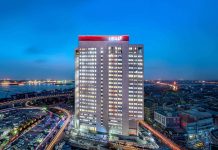
It is true that one of the primary responsibilities of a financial
institution is financial intermediation. At the United Bank for Africa, UBA,
where I work as the CEO of the UBA Foundation and the Group Head for
Communications, when we plan our annual budget, we integrate the 2030
development agenda into the process. Our expected SDG targets are stated from
the onset and this informs resource allocation. To this effect, we are able to
monitor and evaluate impact across the continent.
Operating in 20 African countries, we have a conscious dedication to
improving the lives of people in the communities where we do business. The
three areas of focus for us at the UBA Foundation are Education, Economic
Empowerment and the Environment. We are committed to ensuring that more
children get educated on the continent because this is one of the best ways to
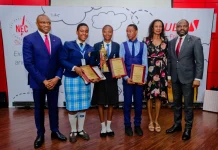
bring the continent out of poverty. Our Read Africa initiative and National
Essay Competitions are targeted at the underprivileged, to give them the
opportunity to read and to learn even at tertiary levels.
The gardens that we are growing across Africa represent part of our
commitment to a sustainable environment. The green environment is not yet as
much a priority in Africa today as it is in the west. We are still battling
with power supply and the fumes of electricity generators which pollute the
environment in ways that are very detrimental to the success of the SDGs.
At UBA, we are championing the mobilisation of funding SMEs as our loan
portfolio grew to about U$5 billion in 2018 across Africa. We desire to create
expanded access to finance for the greater majority and continue to increase
our female representation on the group boards and in top management. Times are
changing, and it is rare now for one to sit on a board and be okay at not
seeing women well represented.
I believe that the 2030 agenda will witness significant progress from
the MDGs. The company I work at, UBA, is playing a major role on the continent
as the Group Chairman, Tony O. Elumelu continues to champion the cause of
poverty eradication on the continent through his Foundation, the Tony Elumelu
Foundation and its impactful entrepreneurship programme.
the MDGs. The company I work at, UBA, is playing a major role on the continent
as the Group Chairman, Tony O. Elumelu continues to champion the cause of
poverty eradication on the continent through his Foundation, the Tony Elumelu
Foundation and its impactful entrepreneurship programme.
We all have a role to play in ensuring the SDG agenda is met. It is not
the work of developmental agencies nor of governments alone. It’s a collective
effort of the private sector(both big and small corporations) and of
individuals playing their own role.
the work of developmental agencies nor of governments alone. It’s a collective
effort of the private sector(both big and small corporations) and of
individuals playing their own role.
Most importantly, the key role that women play in building
communities cannot and should not be under estimated. Women build lives
and families as well as villages, governments and organisations. The De Beers W
summit reinforced to me that in order to have sustainable development, we need
to place emphasis on young people on the continent and ensure that we lift up
their hopes and their dreams for a better future









 were created at the turn of the century in 2000.)