














Africa is home to immense natural wealth, from oil and minerals to fertile land. Yet, as highlighted in a compelling article by journalist Mojeed Alabi (published May 24, 2025), these resources alone haven’t lifted the continent out of poverty. What Africa truly needs to focus on is its people, especially its youth.
With over 60% of its population under the age of 25, Africa is the youngest continent on the planet. This presents both a remarkable opportunity and a looming threat. Each year, 8 to 11 million young people enter the job market, but only 3 million formal jobs are available. Unless we invest intentionally in education, skills development, and entrepreneurship, we risk seeing this youth bulge spiral into mass unemployment, social unrest, and even a migration crisis.
Leaders across Africa are beginning to acknowledge this.
At the Africa Human Capital Summit in Tanzania, Kenya’s President William Ruto called for strategic investment in Africa’s workforce, describing it as the continent’s “gifted human capital that can drive its transformation.”
Similarly, Nigeria’s President Bola Ahmed Tinubu, speaking at the G20 Summit in Berlin, pointed out that Nigeria’s greatest asset isn’t oil but its “highly educated, highly skilled, and naturally industrious”people. He emphasised that this human capital is “the primary asset the country wields over other nations.”
This shift in perspective is timely and essential. As Djibouti’s Foreign Minister, Mahmoud Ali Youssouf, succinctly put it, “The true wealth of Africa lies in its people; we must prioritise investing in our human capital to take charge of our economic future.” This is a rallying call not only to governments but also to the private sector and development partners.
Encouragingly, some businesses are already stepping up. The United Bank for Africa (UBA) Plc, for instance, has committed $6 billion to support small and medium-sized enterprises (SMEs) under the African Continental Free Trade Area (AfCFTA). Considering that 80% of Africa’s economy operates informally, this move directly fuels the kind of grassroots innovation and self-made entrepreneurship Africa needs.
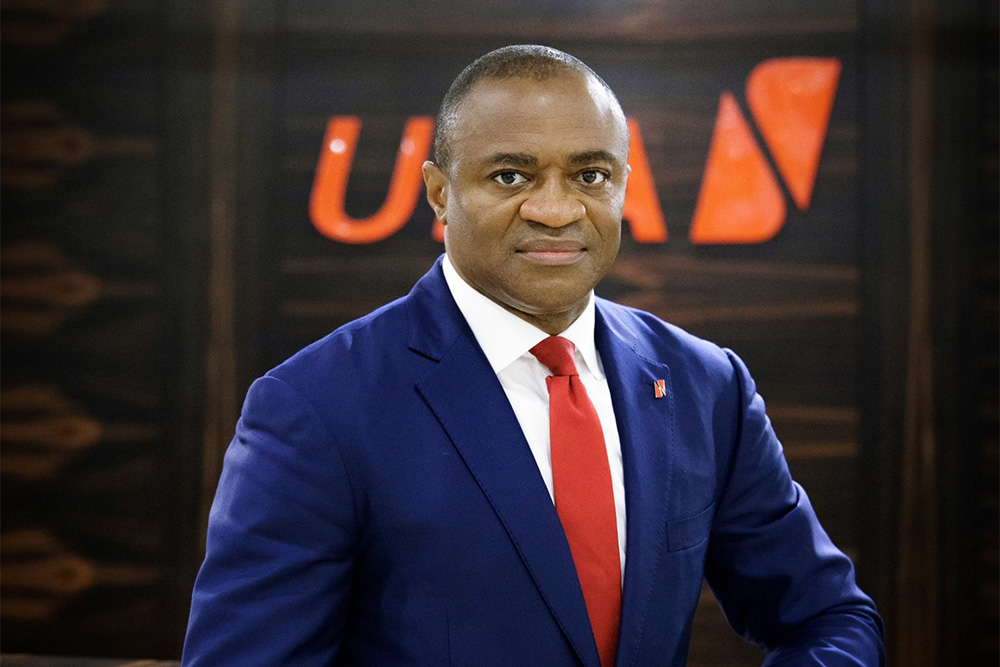
Oliver Alawuba, UBA’s Group Managing Director, explained the bank’s vision: “Our focus is on enabling trade, but more critically, on building the skills and financial access that turn young Africans into job creators, not job seekers.” He emphasised that for Africa’s development goals to be achieved, “we are dedicated to partnering for progress with government and international agencies.”
With more than 20 subsidiaries across the continent, UBA is uniquely positioned to drive economic inclusion through its innovative banking infrastructure. Alawuba highlighted the bank’s role in shaping Africa’s digital payment landscape: “With Afreximbank, UBA is driving the adoption of transformative technologies such as the Pan-African Payment and Settlement System (PAPSS).”
He further noted that PAPSS has “game-changing potential” for SMEs, as it simplifies transactions and eliminates traditional banking bottlenecks, allowing businesses to “operate more efficiently and scale seamlessly across borders.”
These efforts underscore how the private sector can play a transformative role in creating economic opportunities and driving youth empowerment.
Africa’s future doesn’t lie buried in the ground. It walks our streets, sits in our classrooms, and logs into our youth bootcamps. The youth are not a ticking time bomb; they are a goldmine. But we must invest in them now.
Read the original article by Mojeed Alabi: Youth as Africa’s Greatest Resource